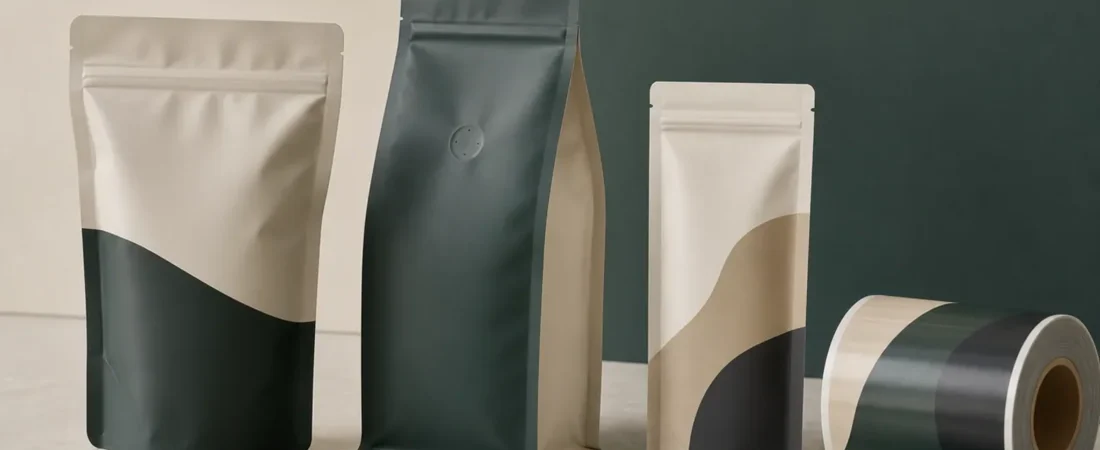
Choosing a packaging barrier structure starts with the product and its distribution requirements—not with a preferred material name. A laminate that works for one product may be unnecessary, insufficient or difficult to run for another, even when both products use the same pouch format.
This guide helps brand owners, procurement teams and product developers define the protection brief that a packaging supplier needs before material selection, sampling and production approval.
Quick Answer
There is no universally “best” barrier material. The correct structure depends on what the product must be protected from, the expected shelf-life target, filling and storage conditions, distribution risks, closure system and package format. Material names alone do not define final package performance: thickness, grade, coatings, metallization, lamination, seals, converting and package geometry all affect the result. Treat any suggested laminate as a starting point for project review and testing, not as a guaranteed specification.
What Does “Barrier” Mean in Packaging?
Barrier describes how a package limits the movement of substances or energy that can affect the product. For flexible packaging, buyers commonly discuss oxygen transmission, water-vapor transmission, aroma retention, light protection and resistance to grease or oil. Physical durability also matters because a material can have strong laboratory barrier data yet lose useful performance if the finished package is poorly sealed, punctured, sharply creased or damaged during distribution.
Oxygen transmission rate (OTR) and water-vapor transmission rate (WVTR) are useful comparison measures, but the test method and conditions matter. Film data alone should not be treated as a direct shelf-life promise. Product behavior, package area, seals, closures, headspace, storage conditions and the filling process all contribute to real-world performance.
Start With What the Product Needs Protection From
Oxygen Barrier
Oxygen exposure may affect oxidation-sensitive foods, roasted coffee, some supplements and other formulated products. The relevant questions include how sensitive the product is, how much oxygen is present after filling, whether gas flushing is used, how the package will be sealed and whether a valve or other fitment is part of the design. A low-OTR film cannot compensate for an open channel or an incompatible closure.
Moisture and Water-Vapor Barrier
Moisture movement can occur in either direction. A dry snack, powder or hygroscopic ingredient may need protection from moisture ingress, while another product may need to limit moisture loss. Required performance depends on the product’s moisture sensitivity, the climate, storage time, package size and seal integrity. “Waterproof” language is not a substitute for a defined WVTR requirement and package evaluation.
Aroma and Flavor Retention
Coffee, spices, flavored foods and some pet products may require attention to aroma retention as well as oxygen and moisture. Aroma performance belongs to the full structure, including the sealant, seams, valve or zipper area and storage conditions. It should be reviewed with the actual product and intended shelf-life target.
Light Barrier
Light-sensitive products may require an opaque, metallized or foil-containing structure. The level of protection depends on the material, coating continuity, thickness, print coverage and package design. A paper-look exterior or dark artwork may reduce visibility, but appearance alone does not establish a validated light barrier.
Grease, Oil and Physical Handling
Products containing fats or oils may require layers, coatings and seals that remain suitable after contact and storage. Puncture, abrasion, flexing, drop conditions and case packing should also be considered. Barrier and physical durability should be reviewed together because damage during converting or distribution can compromise an otherwise suitable structure.
Understanding Common Packaging Materials
The following descriptions explain common functions, not fixed performance. Actual results vary with grade, thickness, coatings, surface treatment, metallization, laminate construction, converting and seals.
PET
Polyethylene terephthalate (PET) is often used as an outer web because selected grades can provide strength, dimensional stability, print or lamination surfaces and resistance to handling. Plain PET is not automatically a high-barrier solution. Coated, oxide-coated or metallized PET grades can provide different oxygen, moisture, aroma and light performance, so the exact film specification matters.
BOPP
Biaxially oriented polypropylene (BOPP) can be used for print, stiffness, clarity, moisture resistance and machinability. Available types include plain, coated, cavitated, sealable and metallized films. Their barrier and sealing behavior can differ substantially; the term “BOPP” by itself is not a complete specification.
PE
Polyethylene (PE) commonly serves as a sealant or inner web in flexible laminates and can contribute toughness, puncture resistance, moisture resistance and processing performance. Seal initiation temperature, hot tack, seal strength, product-contact suitability and compatibility with the filling line depend on the specific resin, film design and converting conditions.
Metallized PET or BOPP
Metallized films use a very thin deposited metal layer to improve opacity and barrier. The base film, metal adhesion, optical density, coatings and handling durability all influence performance. Different metallized PET and BOPP grades can have very different OTR, WVTR, aroma retention, sealability and converting behavior.
Aluminum Foil
An intact aluminum foil layer can provide very strong protection against light, oxygen and moisture. In a flexible laminate, however, foil gauge, pinholes, flexing, folds, converting stresses and seal design still need review. Foil should not be described as automatically correct for every project; its benefits and processing requirements must be evaluated in the finished package.
Paper and Paper-Look Structures
Paper may provide appearance, stiffness, print surface or tactile character, but it generally relies on coatings or laminated layers when functional moisture, oxygen, grease or sealing performance is required. A paper-look film and a structure containing paper are not the same. Neither should be assumed to have a particular barrier or recyclability outcome without reviewing the complete construction and local recovery requirements.
Metallized Film vs Aluminum Foil
Metallized film and aluminum foil can both support opaque, high-barrier structures, but they are not interchangeable labels. Metallized film combines a polymer substrate with a thin deposited metal layer. Depending on the grade, it may offer a useful balance of barrier, flexibility, appearance and converting performance. Aluminum foil is a distinct continuous metal layer that can offer very high barrier and opacity when intact.
The practical decision is project-dependent. Foil gauge and handling can introduce pinhole or flex-crack considerations, particularly through repeated folding or demanding distribution. Metallized-film performance depends on metal coverage, adhesion and how well the deposited layer survives printing, lamination and converting. Either option can be undermined by poor seals, puncture, closure leakage or an unsuitable package design.
Visual appearance also differs. Metallized films may provide a bright metallic look or sit behind printed layers, while foil can be used where opacity and strong barrier potential are priorities. Cost, supply, runnability, package feel and end-of-life objectives should be reviewed alongside protection requirements. Neither material is universally better or automatically suitable.
How Multilayer Structures Work
A multilayer laminate assigns different jobs to different layers. A simplified construction may include:
- Outer layer: print surface, stiffness, abrasion resistance, heat resistance or dimensional stability during converting.
- Barrier layer: the required level of oxygen, moisture, aroma or light protection.
- Sealant or inner layer: sealing behavior, toughness and product-contact function where applicable.
Illustrative structure: printed PET / metallized PET / PE. In a suitable project, the PET may support print and handling, the metallized web may provide the main barrier contribution, and the PE may provide the sealing surface. This is an example structure, not a recommendation for a specific product.
Illustrative structure: printed BOPP / metallized BOPP or PE-based sealant web. Roles and performance depend on the exact grades, coatings and laminate design. A converter must also confirm ink, adhesive, cure, coefficient of friction, sealing window and compatibility with the forming and filling process.
Package performance is therefore not the sum of material names on a specification sheet. Adhesive selection and cure, print coverage, lamination quality, seal geometry, zipper or valve integration, pouch folds and final dimensions all influence the finished result.
Barrier Requirements by Application
The following table identifies buyer questions, not prescribed laminates. Product testing and project review are still required.
| Application Consideration | Main Protection Concern | Questions to Ask |
|---|---|---|
| Roasted coffee | Aroma, oxygen and moisture | Whole bean or ground? Degassing valve? Target shelf life? Filling and gas-flush process? |
| Dry foods and snacks | Moisture; oxygen and grease depending on product | How moisture-sensitive is the product? Fat or oil content? Distribution climate? |
| Pet food and treats | Moisture, oxygen, aroma and grease depending on formulation | Product fat and moisture characteristics? Package weight? Zipper and handling requirements? |
| Supplements | Moisture, light and oxygen depending on formulation | What are the ingredient sensitivities? Package size? Closure and product-contact requirements? |
| Confectionery | Moisture, aroma, grease or light depending on product | Temperature exposure? Fat content? Retail and distribution conditions? |
How Packaging Format Affects the Structure
A material decision cannot be separated from the package format. Stand-up pouches, flat-bottom pouches, side-gusset bags, rollstock and sachets expose the laminate to different folds, seals, panel geometry and converting conditions. A structure that performs well as flat rollstock still needs to be evaluated after it is formed, sealed and handled as the final package.
Zippers, tear notches, spouts and degassing valves change the package system. For coffee, a correctly selected valve is intended to release internal gas while limiting oxygen ingress, but valve type, placement, attachment and surrounding laminate must be reviewed together. Closure convenience does not replace the primary seal or an appropriate barrier structure.
For a comparison of pouch geometry and filling considerations, see how to choose between stand-up, flat-bottom and side-gusset formats. More general format and material options are covered in Flexible Packaging solutions.
Manufacturing and Converting Considerations
Lamination, printing, coating, curing, slitting, sealing and pouch converting can change how a structure performs. Print and adhesive systems must be compatible with the selected webs. Sealant layers need an operating window that suits the equipment, line speed, contamination risk and desired seal strength. Zippers and valves add interfaces that must be controlled during converting.
Sampling should use materials and package geometry that are representative of the intended production structure. Reviews may include dimensions, fill behavior, zipper or valve placement, seal appearance, seal strength, leak testing, print registration and distribution handling. Production approval should define the material structure and critical converting requirements rather than rely on a generic sample.
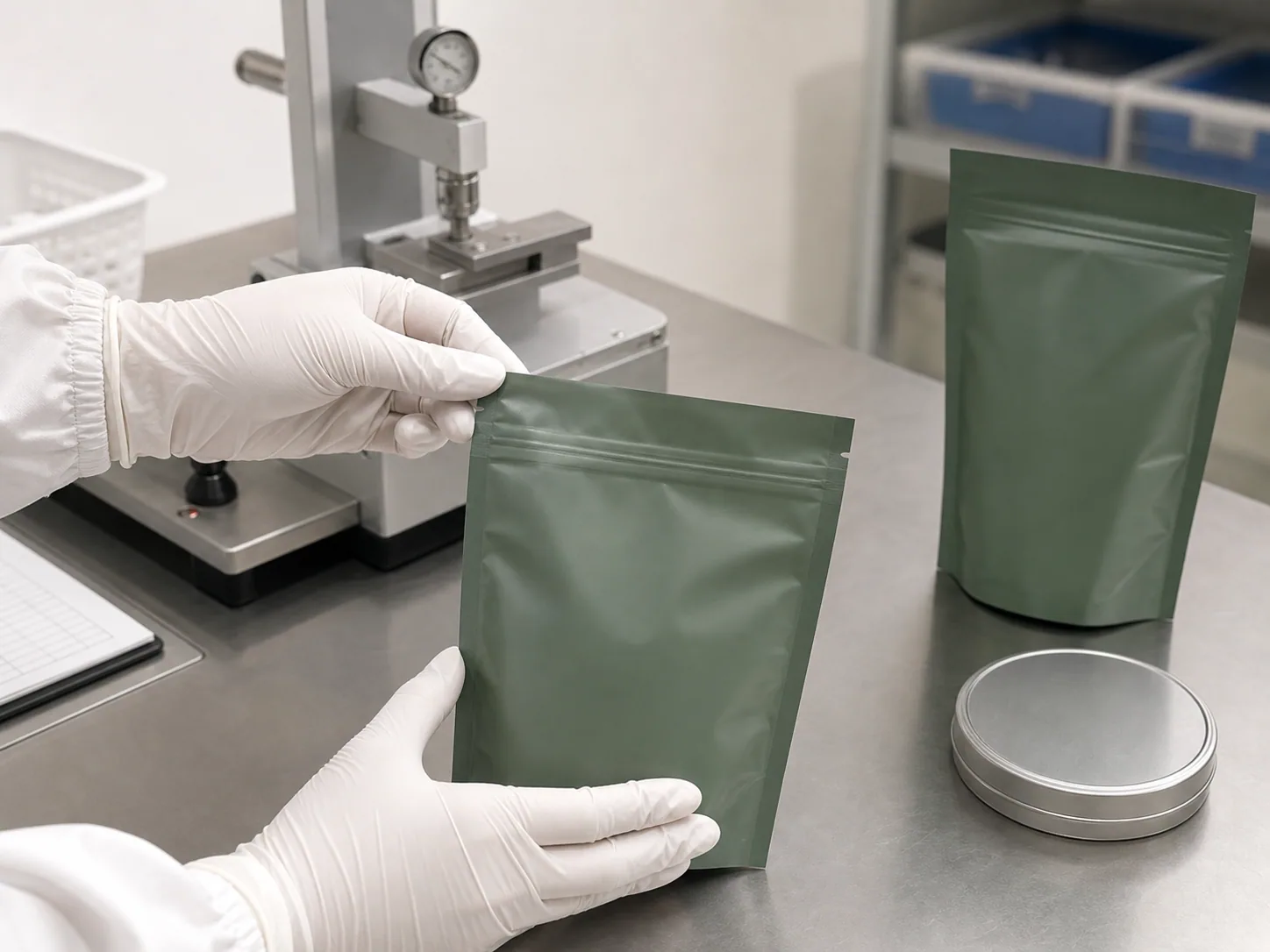
See Packaging Manufacturing for the broader production workflow and Packaging Quality Control for inspection and approval considerations.
Common Barrier-Selection Mistakes
- Selecting a material because its appearance suggests “high barrier.”
- Assuming foil automatically solves every product-protection requirement.
- Choosing a structure before defining the expected shelf-life target and storage conditions.
- Using OTR or WVTR data without checking the test conditions, film grade and package area.
- Ignoring filling and sealing equipment until after the laminate is selected.
- Focusing on flat-film barrier while overlooking seals, zippers, valves, folds and puncture risk.
- Copying another product’s laminate without validating the new product and distribution requirements.
- Assuming thicker film always means better oxygen or moisture barrier.
- Treating paper-looking or recyclable-looking structures as automatically equivalent in performance or recovery options.
FAQ
What is high-barrier packaging?
High-barrier packaging is a relative term for a structure designed to limit oxygen, moisture, aroma, light or another transmission path to a level suitable for the product and distribution brief. It should be defined with measurable requirements and package testing rather than by appearance or a material name alone.
Is aluminum foil always the highest-barrier option?
An intact foil layer can provide very strong oxygen, moisture and light barrier, but the finished package also depends on foil gauge, pinholes, flexing, seals, closures and converting. Foil is not automatically the best overall choice for every filling process, format or distribution condition.
What is the difference between metallized film and aluminum foil?
Metallized film is a polymer film with a thin deposited metal layer, while foil is a distinct metal layer laminated into the structure. Their barrier potential, flexibility, opacity, appearance and converting behavior differ by grade and construction, so they should be compared against the complete project requirements.
Does thicker film always mean better barrier?
No. Thickness can affect some mechanical and transmission properties, but polymer type, grade, orientation, coating, metallization and laminate design can be more important. A thicker plain film may not provide the same oxygen or light barrier as a thinner purpose-designed barrier layer.
How do I know what barrier my product needs?
Define the product’s sensitivity to oxygen, moisture, aroma loss, light, grease and handling; then document the shelf-life target, filling process, package format, storage and distribution conditions. A packaging supplier can use that brief to propose candidate structures for review, sampling and testing.
Can recyclable packaging provide barrier protection?
Some recyclable-design structures can provide useful barrier performance, but capability varies by material system, coatings, seals, product requirements and local collection or recycling rules. Recyclability and barrier should both be evaluated for the complete structure; neither should be assumed from appearance or a single layer.
What information should I provide when requesting a packaging recommendation?
Provide the product, format, dimensions, fill weight or volume, protection requirements, expected shelf-life target, filling and sealing process, closure or valve needs, storage and distribution conditions, target market and expected quantity. Avoid asking for a laminate recommendation based only on the product category.
Related Packaging
- Flexible Packaging
- Pouch Format Selection Guide
- Coffee Packaging
- Pet Food Packaging
- Supplements Packaging
- Manufacturing
- Quality Control
Request a Quote
A useful barrier recommendation requires the product, package format, dimensions, fill weight or volume, protection requirements, expected quantity, filling process and target market. Share those project details through the Request a Quote pathway for specification review. A final structure should be confirmed through project review, sampling and appropriate testing.