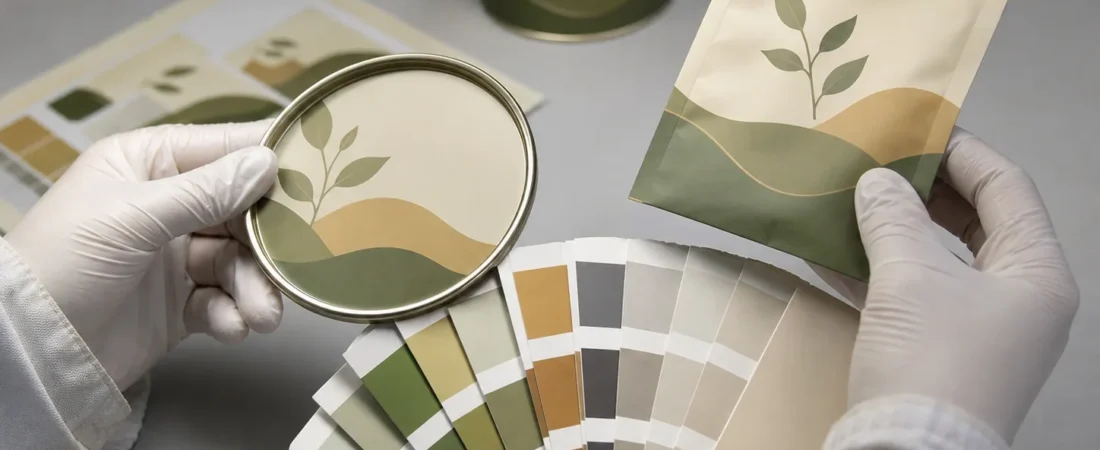
Selecting a packaging printing method is a commercial and technical decision. Rotogravure, flexographic and digital printing can each produce effective packaging, but they differ in image carriers, setup, repeat-job economics, versioning flexibility, substrate compatibility and production planning.
This guide explains those differences for B2B buyers. It does not establish a universal winner or a fixed quantity threshold. The appropriate process depends on the approved artwork, package format, material structure, number of SKUs, color expectations, order profile and the capabilities of the proposed production equipment.
Quick Answer
Rotogravure can be well suited to repeat, higher-volume programs where engraved-cylinder tooling, stable specifications and consistent repeat production make commercial sense. Flexographic printing can support a broad range of packaging applications and production volumes, depending on the press, plates, substrate, graphics and job requirements. Digital printing can be attractive for shorter runs, prototypes and multiple versions where conventional gravure cylinders or flexographic plates for the printed image are less desirable.
None of these descriptions is an automatic recommendation. A buyer should compare the complete project cost and production plan, including tooling, substrate procurement, converting, quality control, future artwork changes and repeat-order expectations.
Why Printing Method Matters
Printing affects more than appearance. The chosen process must reproduce the approved artwork on the specified substrate, maintain acceptable registration and color, integrate with lamination or coating where required, and continue through pouch making, bag forming, carton converting or other finishing steps.
Method selection also affects how a project handles setup and repeat orders. Conventional tooling may be valuable when an approved design will repeat at meaningful volume, while a digitally imaged job may offer more flexibility when quantities or artwork versions change frequently. The best decision therefore starts with the full production profile rather than a quality ranking based on process name alone.
Rotogravure Printing
Rotogravure transfers ink from recessed cells engraved into a printing cylinder. Packaging artwork is separated by color, and each required color normally uses its own engraved cylinder. Cell geometry, ink, substrate, press control and downstream converting all influence the printed result.
Gravure can support fine tonal work, detailed images and repeatable production when the artwork, cylinders and operating conditions are properly controlled. It is often considered for established, repeat flexible-packaging programs where the cylinder investment and setup can be distributed across the expected production profile.
The same tooling can limit flexibility. A substantial artwork change may require one or more new cylinders, and very short runs may not make effective use of conventional setup. Buyers should clarify cylinder ownership, storage, expected service life, replacement conditions, color count and the treatment of future design revisions before comparing quotations.
Flexographic Printing
Flexographic printing uses flexible relief plates mounted on cylinders or sleeves. Ink is metered to the plate and transferred to the substrate. Modern flexography can print films, papers, labels, corrugated materials and other packaging substrates, subject to the press configuration, inks, plate system and surface requirements.
Flexography can serve repeat work across different order profiles. Plates are conventional tooling and should be included when comparing setup, repeat orders and artwork changes. Plate material, mounting, anilox specification, ink control, press condition and substrate behavior can affect solids, fine type, tonal transitions and color consistency.
Flexography should not be treated as an inherently lower-quality process. A well-specified flexographic job can support demanding packaging graphics, but the achievable result depends on the complete production system. Buyers should confirm print direction, repeat dimensions, minimum graphic features, color strategy and proofing requirements with the proposed converter.
Digital Printing
Digital packaging printing creates the image from digital data without conventional gravure cylinders or flexographic plates for that printed image. The exact imaging technology varies by equipment. Primers, coatings, white ink, finishing tools, cutting dies or converting setup may still be required, so “digital” does not mean that every setup cost disappears.
Digital can be useful for shorter runs, prototypes, market tests, seasonal artwork and multiple SKU versions where supported by the press and workflow. It can also reduce the need to hold a separate conventional image carrier for every version. These advantages are especially relevant when artwork changes frequently or when the total program is divided among many designs.
Digital is not automatically the least expensive or fastest choice. Press format, printable width, substrate qualification, ink set, color gamut, coating, finishing, queue and available capacity can constrain a project. At larger repeat volumes, the unit economics of digital and conventional production may differ. The proposed equipment and complete finished-package workflow must be reviewed.
Rotogravure vs Flexographic vs Digital Comparison
| Factor | Rotogravure | Flexographic | Digital |
|---|---|---|---|
| Conventional tooling | Engraved cylinders for the printed colors. | Flexible relief plates, typically mounted on cylinders or sleeves. | No conventional gravure cylinders or flexographic image plates; other finishing tools may still apply. |
| Typical production profile | Often evaluated for stable, repeat programs where cylinder tooling is commercially justified. | Can support varied packaging applications and order profiles depending on equipment and job requirements. | Often evaluated for shorter, versioned or frequently changing work where the equipment supports the application. |
| Short-run suitability | May be limited by cylinder and setup requirements. | Possible, but plate and press setup remain part of the commercial calculation. | Can be attractive because conventional image-carrier tooling is avoided. |
| Repeat-order suitability | Strong potential when approved cylinders, substrate and process remain controlled. | Strong potential when plates, mounting, ink and press conditions are controlled. | Repeatability depends on the digital press, color workflow, substrate and maintained job data. |
| Multiple SKUs or versions | Artwork differences may require separate or changed cylinders unless a production strategy allows shared elements. | Artwork differences may require separate or changed plates. | Can support multiple files or variable versions where the workflow and equipment allow. |
| Image and detail capability | Can support fine detail and tonal imagery with suitable engraving and process control. | Modern systems can support detailed packaging graphics with suitable plates, screening and process control. | Can support detailed and versioned graphics within the press resolution, gamut and substrate limits. |
| Substrate considerations | Substrate, surface treatment, ink and dryer capability must match the press and structure. | Broad application range, but plate, ink, anilox and substrate behavior must be matched. | Only qualified substrates, formats, inks and widths supported by the specific system should be assumed. |
| Color consistency | Depends on cylinder condition, ink, viscosity, substrate and press control. | Depends on plates, anilox, ink, mounting, substrate and press control. | Depends on calibration, color management, ink set, substrate and press condition. |
| Sampling and prototyping | Production-representative samples may require cylinder tooling and scheduled press setup. | Production-representative samples may require plates and scheduled press setup. | Can support rapid artwork iteration where the final substrate and finishing path are available. |
| Best considered when | The program is stable, repeatable and can justify cylinder-based production. | The job fits the converter’s flexographic platform, substrate and production profile. | Versioning, shorter quantities or artwork flexibility are important and the application is equipment-compatible. |
This comparison is directional. It does not rank price or print quality and does not replace a review of the actual artwork, press, substrate and finished-package specification.
How Order Quantity Affects the Decision
Order quantity influences printing economics, but it does not determine the method by itself. A project with one design and predictable repeats has a different profile from the same total quantity divided across many SKUs. Tooling, setup waste, press time, changeovers, repeat use and inventory exposure must be evaluated together.
Packaging MOQ may also be driven by material procurement, laminate structure, web width, pouch or carton dimensions, zipper or valve components, converting setup and factory scheduling. A digitally printed web may avoid conventional print tooling but still be subject to material and converting minimums. Conversely, conventional printing may be viable at a quantity that would be described as short in another plant when the job fits available tooling and production planning.
Ask for the commercial assumptions behind a recommendation instead of relying on a universal break-even number. The relevant quantity is the approved quantity per size, material structure and artwork version, together with realistic repeat-order expectations.
Artwork, Color and SKU Considerations
Artwork should be reviewed against the chosen process before final approval. Process printing builds images from a defined color set, while spot colors may be used where supported to target specific brand colors or functional requirements. The suitable approach depends on the design, substrate, ink system, press configuration and approved color expectations.
Registration tolerances affect fine reverses, small text, barcodes, knockouts and tightly aligned color elements. Multiple versions also require careful file control. In gravure or flexo, a change to one graphic element may affect one or more cylinders or plates. In digital production, separate files can be easier to route, but every version still needs review, approval and correct association with the intended package.
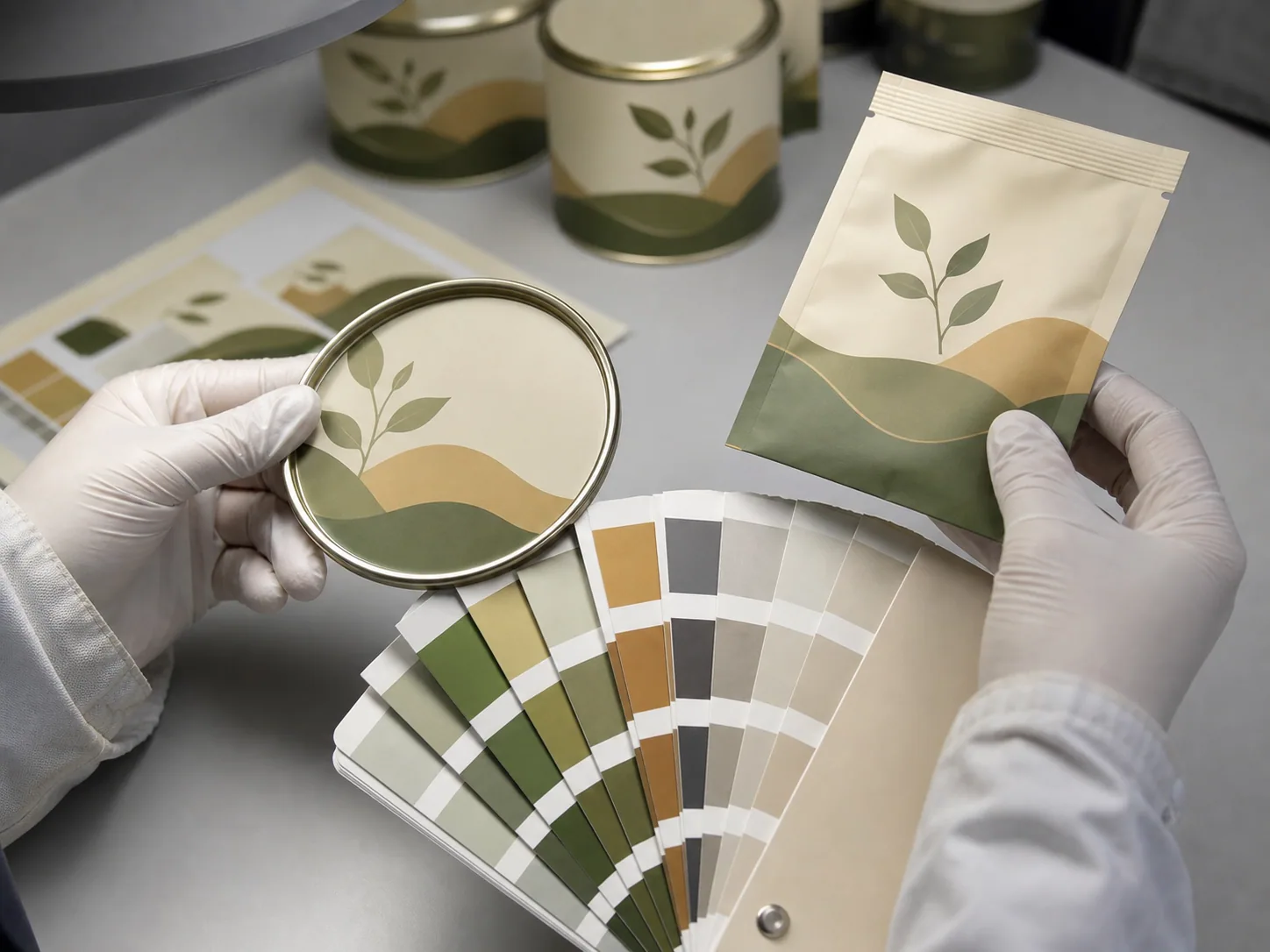
Screen appearance is not a perfect predictor of printed color. Proof type, viewing conditions, substrate color, white ink, opacity, surface finish, lamination and ink behavior all influence the result. Buyers should establish an approved proof or physical reference and define what will control future repeat production.
Packaging Materials and Format Compatibility
The printing process must be compatible with the material that carries the image. Flexible films can differ in surface treatment, heat response, opacity, dimensional behavior and ink adhesion. Paper and paperboard vary in coating, texture, absorbency, stiffness and caliper. Metallized films, foil-containing laminates, clear windows and white-ink requirements introduce additional considerations.
Printing is also connected to the finished format. Artwork repeats and print direction must align with web layout, seals, folds, gussets, zippers, valves and cutting positions. For material roles, see Flexible Packaging Materials: PET, PE, BOPP, Foil & Paper Explained. For the relationship between protection and laminate design, see How to Choose a Packaging Barrier Structure.
A project may involve Flexible Packaging, Paper Packaging or another format, but no printing method should be assumed compatible with every substrate and package. The converter must confirm the proposed construction and equipment route.
Sampling and Production Considerations
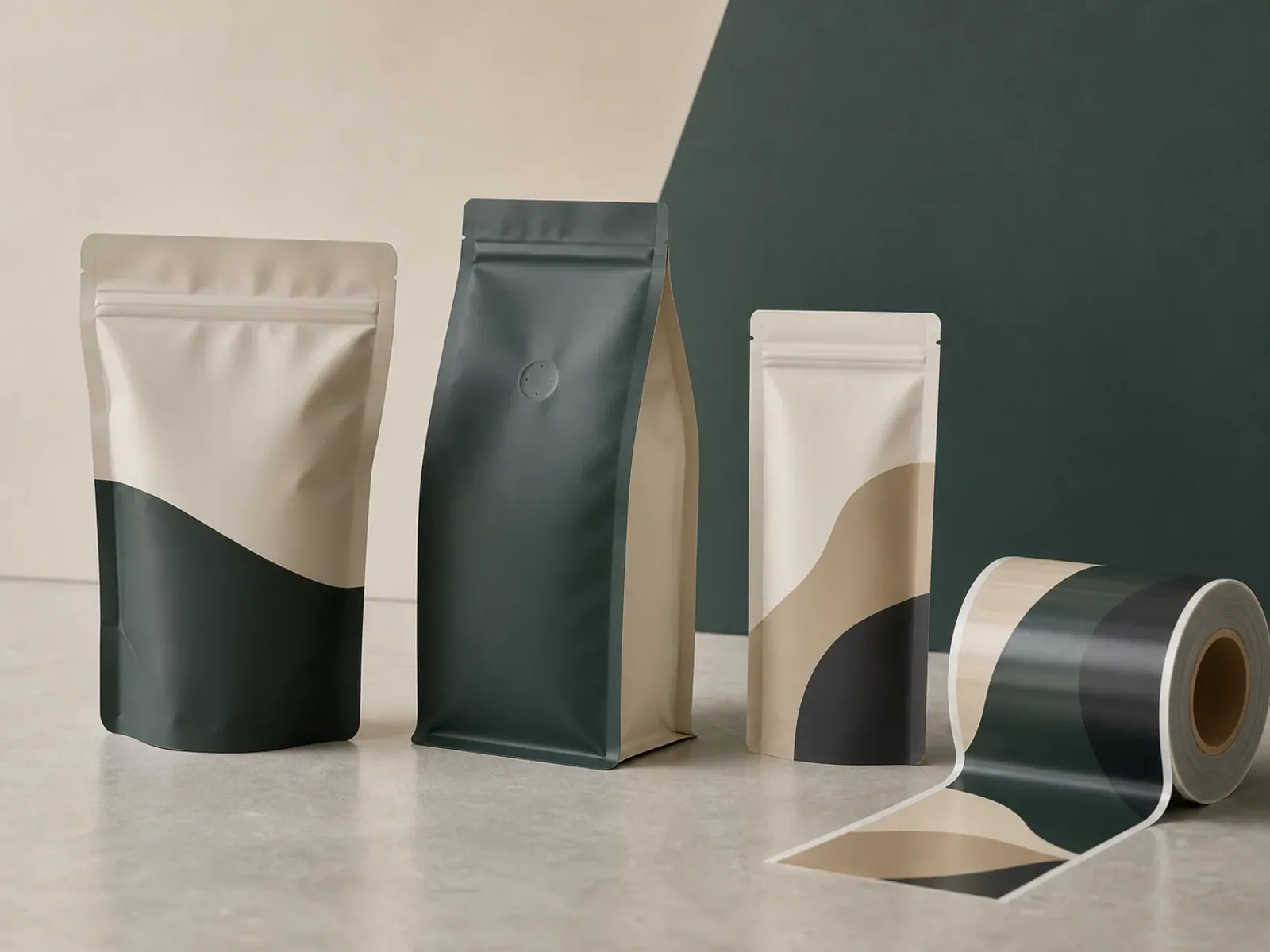
A sample can answer different questions. A digitally printed prototype may help evaluate layout, dimensions and general presentation, but it may not duplicate the exact ink, color gamut, surface or finish of a later gravure or flexographic production run. A production-representative press proof can provide stronger process evidence but may require conventional tooling and scheduled press time.
Before production, confirm what the sample represents and what remains subject to approval. The typical sequence is artwork approval → printing → lamination or coating where applicable → converting or forming → inspection. Color, registration, bond, dimensions, seals, finish and package function should be evaluated at the appropriate stage.
Royal Pack Group’s Packaging Manufacturing and Quality Control pages explain the broader workflow. The printing method should be selected within that complete production and verification plan.
Common Printing-Selection Mistakes
- Choosing a process only from a perceived print-quality hierarchy.
- Comparing quotations without separating tooling, setup and repeat-order assumptions.
- Assuming digital is always the lowest-cost answer for a short run.
- Assuming gravure is always the lowest-cost answer at volume.
- Ignoring future SKU, language, regulatory or promotional artwork changes.
- Finalizing artwork before confirming repeat, print direction and process constraints.
- Expecting a monitor or office proof to predict the final printed color perfectly.
- Overlooking how substrate color, coating, texture and lamination change appearance.
- Using a prototype from one process as an unconditional color standard for another.
- Selecting the printing method before confirming the final package format and material structure.
FAQ
What is the difference between rotogravure and flexographic printing?
Rotogravure uses recessed image cells engraved into printing cylinders. Flexography uses raised flexible relief plates mounted on cylinders or sleeves. Both can support high-quality packaging, but their tooling, press setup, ink transfer and job economics differ.
Is digital printing suitable for flexible packaging?
It can be, when the proposed digital press supports the film or laminate, web width, inks, color requirements and downstream lamination or converting route. Compatibility should be confirmed for the specific equipment and finished package.
Which printing method is best for small orders?
Digital may be attractive for shorter or multi-version work, but there is no universal threshold. Material procurement, package dimensions, converting setup, finishing, total SKU count and available equipment can make another route more practical.
Does rotogravure require engraved cylinders?
Yes. The gravure image is carried in engraved cells on a cylinder or cylinder sleeve. The required tooling set depends on the artwork, colors and production configuration, and significant design changes may require revised tooling.
Does flexographic printing require plates?
Conventional flexographic printing uses flexible relief plates. Plate count and configuration depend on the artwork and color plan. Plate production, mounting, storage and replacement should be included in the project and repeat-order review.
Can different SKUs use the same printing tooling?
Only when the shared and changing artwork elements allow it within the chosen process. Gravure cylinders or flexographic plates carry fixed image content, while digital workflows can route separate files where supported. Each SKU still needs controlled artwork and approval.
What information is needed to choose a packaging printing method?
Provide the package format, material or proposed structure, dimensions, quantity per SKU, number of versions, artwork and color requirements, surface finish, repeat-order expectations, target timing and any approved physical color reference.
Related Packaging
- Pouch Format Selection Guide
- Packaging Barrier Structure Guide
- Flexible Packaging Materials Guide
- Flexible Packaging
- Paper Packaging
- Manufacturing
- Quality Control
Request a Quote
To review a packaging printing project, provide the package format, proposed material or structure, dimensions, quantity per SKU, number of artwork versions, color expectations, artwork status, finish requirements and target timing. Submit the brief through Request a Quote. The printing method should be confirmed only after the artwork, substrate, format and production requirements have been reviewed together.